
The Conflict of Partial Obedience
Don't Leave God Alone: How to Get God's Attention, Remain in His Presence, and Even Change His Mind to Make a Difference in Your WorldThis flow traces how incomplete responses repeatedly limit or delay the full expression of faith.
increasing Bearing strength in each event
 decreasing
Bearing strength in each eventdecreasingOne Net Instead of Nets
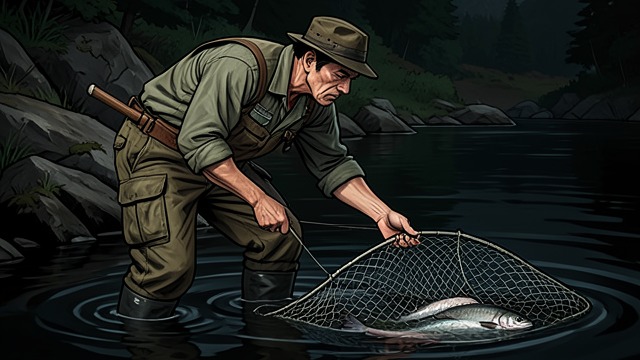
One Net Instead of Nets
Peter responds to Jesus Christ’s instruction with a reduced action, lowering one net rather than the nets commanded.
Fatigue as Resistance
His exhaustion and disappointment shape the scale of his obedience.
Blessing with Limitation
The catch is still great, but the story invites readers to imagine what fuller obedience might have received.
Abraham Stops at Ten
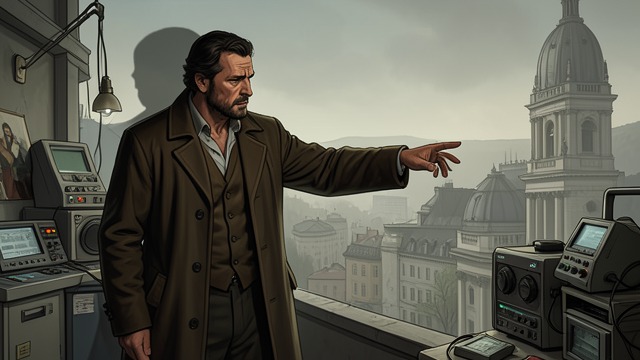
Abraham Stops at Ten
Abraham repeatedly bargains for Sodom and Gomorrah but ends his appeal after asking for ten righteous people.
Courage Narrowed
His earlier boldness gives way to a stopping point that the book interprets as premature surrender.
Unfinished Advocacy
The unresolved question is whether one righteous person might have provided a further basis for mercy. The conflict is therefore between persistence and exhaustion.
The Half-Empty Prayer

The Half-Empty Prayer
Hank compares unfocused prayer to shooting arrows without aiming at a target.
Desperation Without Direction
A person may pray loudly or frequently while never identifying the requested outcome.
Scriptural Aim
Specific promises, written requests, worship, and thanksgiving transform prayer into a prepared arrow rather than an accidental discharge.
The Hesitant Storm Response
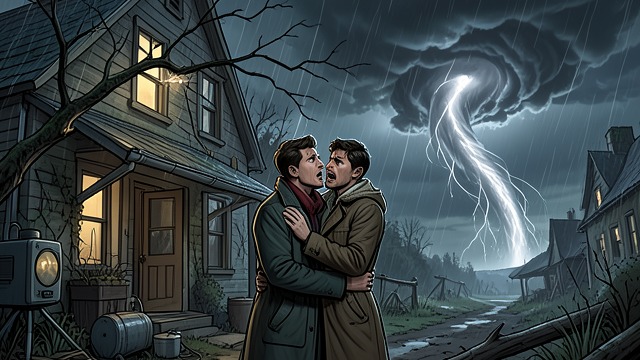
The Hesitant Storm Response
Hank and Brenda speak to a tornado but retreat quickly when a branch strikes their house.
Faith Meets Instinct
The scene exposes the gap between theological confidence and bodily fear.
Growth Through Failure
Rather than erase the failure, the book uses it to show that authority develops through repeated practice and honest recognition of limitation.
The Choice to Advance
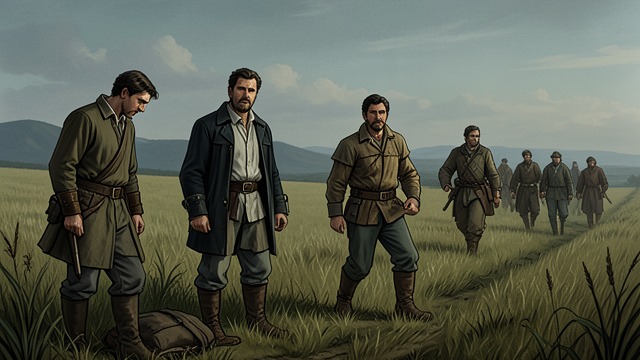
The Choice to Advance
The four lepers decide that remaining still is more dangerous than entering the enemy camp.
Death by Inertia
Their central conflict is not only famine but the temptation to keep occupying a familiar place.
Risk as Movement
They act without certainty and discover that the apparent enemy has already been displaced. Their advance turns uncertainty into provision.
during Peter’s response to Jesus Christ
at the end of Abraham’s intercession
during the teaching on prayer targets
during Hank and Brenda’s first tornado account
during the four lepers’ famine decision
